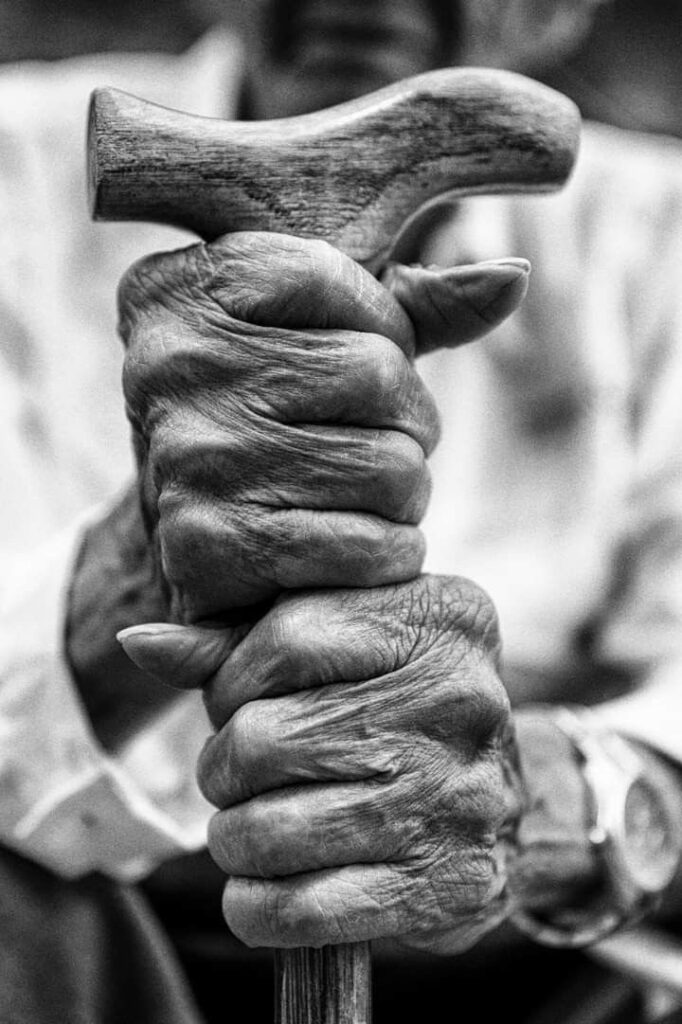
Time leaves marks on hands, on faces, on memories.
But curiosity does not age.
The desire to learn, to communicate, to feel part of something bigger remains quietly, patiently waiting for the right moment.
We often talk about technology as if it belonged only to the young: fast fingers, quick screens, constant updates.
Yet many older people live every day surrounded by devices they did not choose, tools that arrived suddenly, without instructions, without time to understand.
For them, the digital divide is not resistance.
It is solitude disguised as difficulty.
It is the fear of pressing the wrong button.
It is the feeling of being “too late.”
And yet, when someone takes the time to sit beside them, things change.
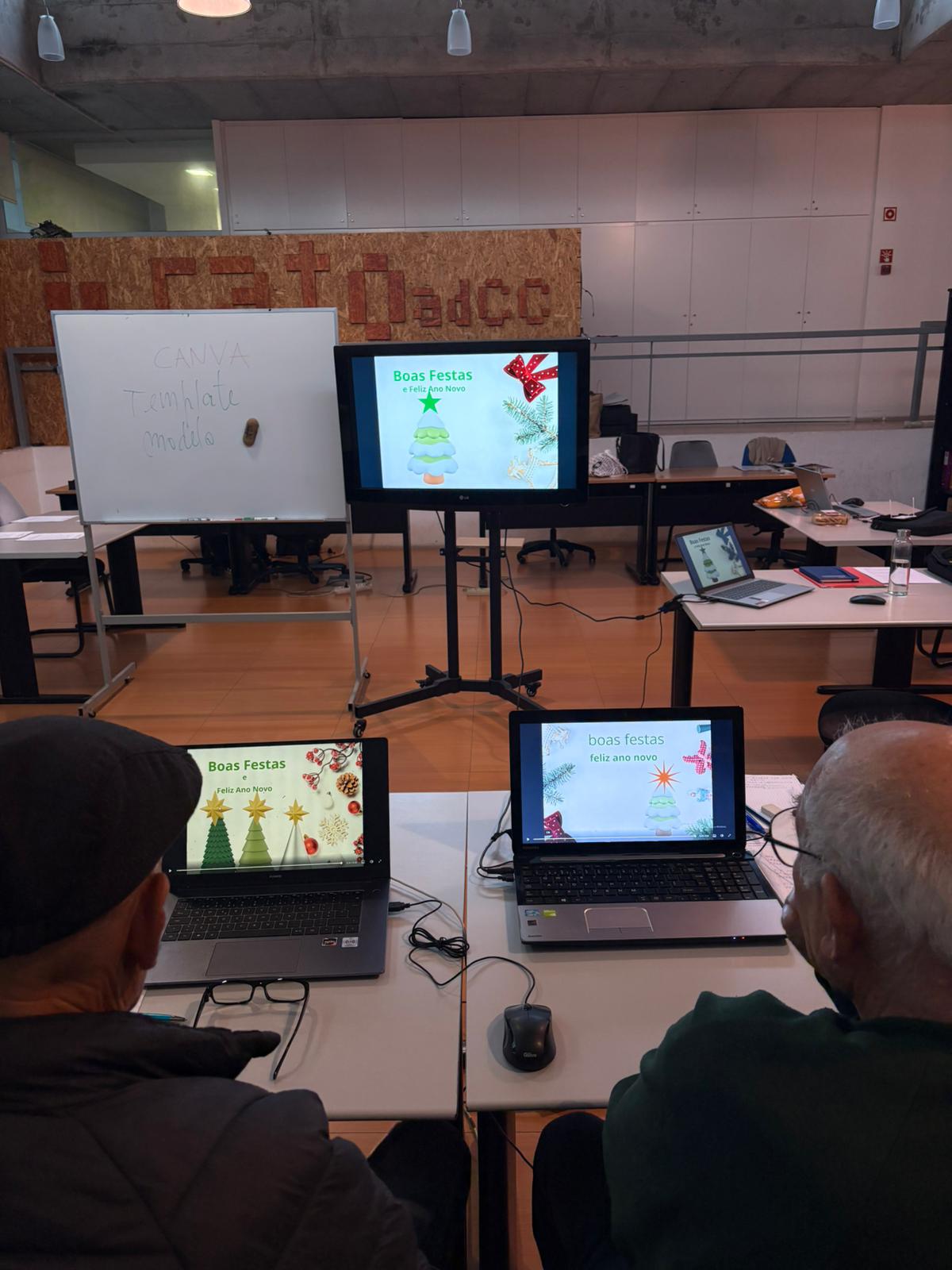
Before Christmas, the Rato ADCC organized a workshop dedicated to using Canva, a simple but powerful tool for creativity.
Together, participants learned how to create a personalized Christmas card, choosing colors, words, images, small decisions full of meaning.
For some, it was the first time they had created something digital on their own.
For others, it was the first time they sent a message not just written, but crafted.
In that room, technology slowed down.
There was no rush, no performance.
Only hands helping hands, laughter over mistakes, pride over small achievements.
Learning, in this context, is not about mastering software.
It is about belonging.
About realizing that it is still possible to learn, to express oneself, to surprise others and oneself.
These classes remind us that digital inclusion is also emotional inclusion.
It is the right to say: “I can do it too”.
It is the right to stay connected to loved ones, to traditions, to joy even through a screen.
Because when an older person learns to use technology, they are not just learning a tool.
They are reclaiming space in a world that too often moves without waiting.
And perhaps this is the most important lesson of all:
It is never too late to feel part of something