Adolescence is a deeply relational phase of life.
Through interaction with others,
young people build their identities,
learn how to navigate the world
and make sense of their experiences.
Today, however, the “other” adolescents relate to is no longer only a real person.
More and more often, it is a screen, an algorithm, an artificial intelligence.
AI is now part of everyday life and learning.
It responds quickly, suggests solutions and often seems to have an answer for everything.
This constant availability can be helpful, but it can also change the way young people think and learn.
When answers come instantly,
it becomes harder
to pause,
to doubt,
to reflect.
Yet growing up means exactly this:
learning to stay with uncertainty,
to ask questions
and to develop one’s own way of thinking.
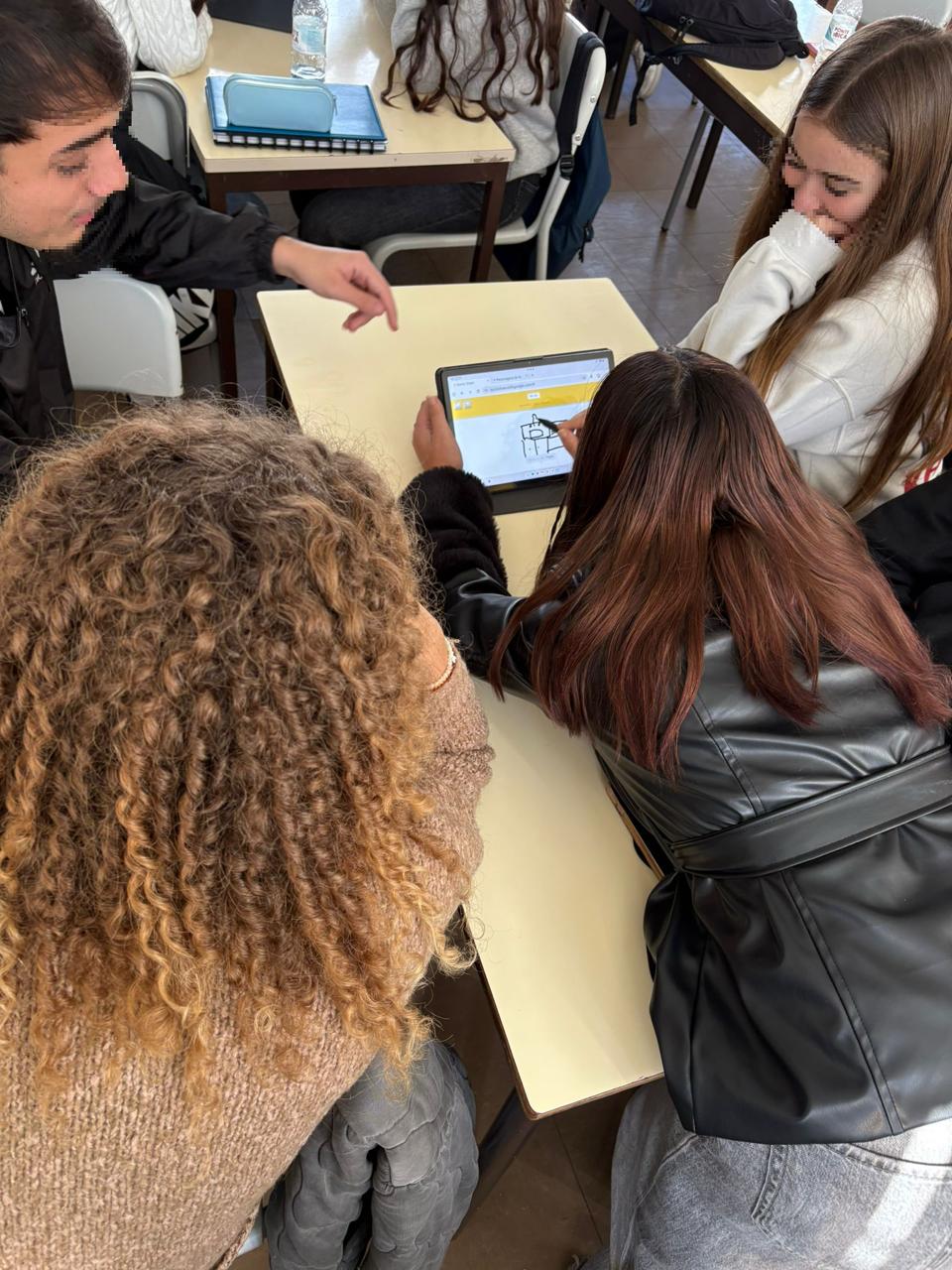
This reflection emerged during a workshop held at school with students.
The aim was not to teach them how to use artificial intelligence, but to help them understand that it is not an absolute source of truth. Together, we examined AI-generated answers, read them carefully and questioned them.
For a moment, technology slowed down. It did not lead thinking , it supported it.
What became clear is that artificial intelligence is a machine.
It works with data, it can make mistakes, oversimplify or leave things out.
A well-written answer is not necessarily a true one.
Throughout the workshop, the importance of critical thinking emerged strongly: checking information, comparing sources, not trusting an algorithm blindly.
Studying does not mean delegating thinking, but exercising it.
AI can be a useful tool, but it cannot replace experience, dialogue or reflection with others and with oneself.
In an age of instant answers, educating adolescents to think autonomously is a central challenge.
This is not about rejecting technology, but about using it consciously.
Because technology can support thinking.
But thinking critical, free and human still needs time, effort and responsibility.
And it is a right that must be protected, nurtured and taught.